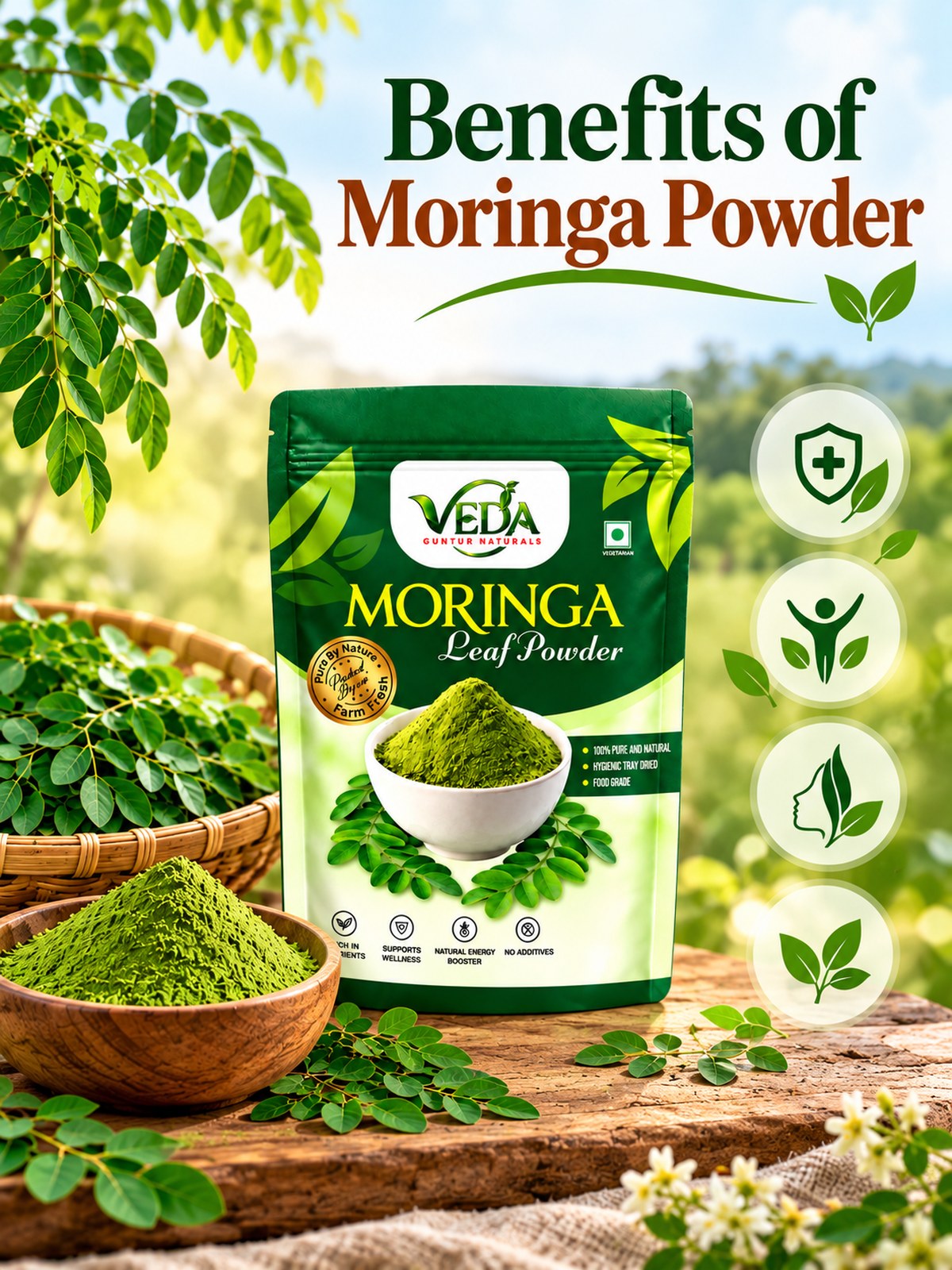
Benefits of Moringa Powder Often called the “miracle tree,” Moringa oleifera has been used in traditional medicine and everyday cooking across parts of Asia and Africa for centuries. Today, moringa powder — made by drying and grinding the tree’s nutrient-dense leaves — has gained popularity worldwide as a simple way to add a concentrated source of vitamins, minerals, and plant compounds to daily meals. Here’s a closer look at what makes moringa powder worth adding to your routine.
A Concentrated Source of Nutrients
Moringa leaves are naturally rich in vitamins and minerals, including vitamin A, vitamin C, calcium, potassium, and iron. Because the powder is made by dehydrating the leaves, these nutrients are concentrated into a small amount, meaning even a spoonful can contribute meaningfully to daily nutrient intake.
Rich in Plant-Based Protein
Unlike many leafy greens, moringa contains a notable amount of plant-based protein, including several essential amino acids. This makes it a valuable addition for those looking to boost protein intake through plant sources, particularly in vegetarian and vegan diets.
Packed with Antioxidants
Moringa powder contains a range of antioxidant compounds, including quercetin and chlorogenic acid, which help the body combat oxidative stress. These antioxidants are part of what gives moringa its reputation as a supportive addition to a health-conscious diet.
Supports Healthy Digestion
The fiber content in moringa powder can support healthy digestion, contributing to regularity and gut health. Its fiber, combined with other plant compounds, is part of why moringa has traditionally been included in diets focused on overall wellness.
May Support Blood Sugar Balance
Some traditional uses of moringa have centered on its potential role in supporting healthy blood sugar levels, and modern interest in the plant has continued to explore this area. While it shouldn’t replace medical guidance for blood sugar management, it’s often included as part of a broader, balanced approach to diet.
Anti-Inflammatory Properties
Moringa contains compounds that are believed to have anti-inflammatory properties, which is part of why it has long been used in traditional remedies. Chronic inflammation is linked to a range of health concerns, making anti-inflammatory foods a valuable part of an overall wellness-focused diet.
Supports Skin and Hair Health
Beyond internal health, moringa’s vitamin and antioxidant content have made it a popular ingredient in skincare and haircare as well. Some people use moringa powder in DIY face masks or hair treatments, valuing its nutrient profile for supporting skin hydration and overall hair health.
A Sustainable, Easy-to-Grow Crop
Moringa trees are notably hardy, drought-resistant, and fast-growing, making them a sustainable crop choice in many regions, including areas facing water scarcity. This makes moringa not just nutritionally valuable, but also an environmentally practical option for communities looking to grow nutrient-dense food with minimal resources.
Easy to Add to Everyday Meals
One of moringa powder’s biggest advantages is its versatility. It can be stirred into smoothies, soups, and curries, mixed into dough for bread and flatbreads, whisked into dressings and dips, or simply sprinkled over meals as a nutritional finishing touch — making it easy to incorporate into a variety of cuisines and cooking styles.
A Traditional Ingredient with Modern Relevance
While moringa has only recently gained mainstream popularity in many parts of the world, it has been a staple in traditional diets and folk medicine for generations in South Asia and parts of Africa. Its resurgence today reflects a broader interest in returning to nutrient-dense, natural foods with a long history of traditional use.
Final Thoughts
Moringa powder offers a simple, versatile way to add a concentrated dose of vitamins, minerals, protein, and antioxidants to everyday meals. Whether stirred into a morning smoothie or mixed into dinner, this traditional superfood continues to earn its modern reputation as one of nature’s most nutrient-dense offerings.
